Tile Grouting Cost in India — Material vs Labour, Cement vs Epoxy
What is Tile Grouting Cost in India : material and labour separated, cement against epoxy over the life of the floor, and where quotes go wrong.
Three quotes come in for the same bathroom. Same floor, same tiles, same city, same week.
₹5,000. ₹12,000. ₹22,000.
Most people take the middle one, on the theory that the cheap one is hiding something and the expensive one is taking them for a ride. It is a reasonable instinct. It is also how you end up picking a number instead of a job.
Because those three quotes are not three prices for the same work. They are three different jobs wearing the same word.
As of August 2026, epoxy tile grouting in India is generally quoted at ₹25–50 per sq ft with material and labour together, and cement grouting sits well below that. City, joint width and applicator all move it.
But before you compare a single rupee, there is something worth knowing about what you are actually buying — because grout is not the finishing touch on a bathroom. It is the waterproofing line, and it is the cheapest part of the job to get wrong.
What you are actually paying for
Your tiles are water-resistant. The joints between them are not. Neither are the corners, or the junction where the floor meets the wall.
That is the whole point of grout. It is not decorative filler — it is the seal across every gap in a surface that spends its life wet.
When that seal goes, water does not sit politely on the floor. It travels through the joint, gets behind the tile, and works into the slab. In a standalone house you find out slowly: a dark patch, a smell, tiles that sound hollow when you tap them.
In an apartment, you find out because your neighbour downstairs calls about their ceiling.
That repair is a different category of expense entirely. Two flats, two families, a contractor working from both sides, and tiles lifted in a bathroom that was perfectly fine until yesterday. Industry write-ups on Indian bathroom seepage regularly put the combined bill past ₹50,000 once both homes are involved — more than double what doing the grouting properly costs in the first place, and many times over the cheap quote.
Hold that number next to the ₹5,000 quote. The gap between the cheap quote and the good one is not really ₹7,000. It is ₹7,000 against a five-figure risk you carry for as long as you own the flat.
That is the axis these quotes should be compared on. Now the numbers make sense.
Why every price you find contradicts the last one
Search for what grouting costs and page one will hand you ₹10 per sq ft, ₹45 per sq ft, and ₹150–300 per sq ft. One site lists epoxy grout material at ₹1,250 per square foot, which is wrong by roughly two orders of magnitude and has sat there long enough to rank anyway.
You are not missing something. “Grouting cost” is three different numbers sharing a name:
- Material — the grout itself, per kg.
- Labour — raking out old grout, cleaning joints, applying, removing haze.
- All-in — both, per sq ft of floor.
A supplier quotes the first. A contractor quotes the third. A marketplace listing quotes whichever looks better and does not say which. Line them up against each other and of course nothing matches.
Your ₹5,000 quote is probably material and a fast hand. Your ₹22,000 quote probably includes raking out, epoxy, and a crew that has done it before.
Material: what the grout itself costs
Grout is sold by weight. Floors are measured by area. The number that actually matters is rupees per sq ft of finished joint — and that is decided by your tile size and joint width far more than by the brand on the bag.
| Grout type | Material cost | Where it belongs |
|---|---|---|
| Cement-based | Lowest per kg | Dry areas, low traffic, budget-led work |
| Polymer-modified cement | Moderate | General residential — a real step up in durability |
| Epoxy | Highest per kg, often several times cement | Wet areas, kitchens, commercial floors, anywhere staining matters |
The variable nobody warns you about is joint size. Consumption climbs steeply as joints widen and tiles shrink. A 2 mm joint on 600×600 tiles uses a fraction of what a 5 mm joint on 300×300 tiles does — across the identical floor area.
Which gives you a fast test. A quote written without asking your tile size and joint width is a guess wearing a decimal point. If nobody asked, you have learned something about the quote.
We do not publish a headline price for our own grouts, for exactly that reason — a rupees-per-kg figure with no reference to your joints would be another number in the pile that made you distrust search results in the first place. Send the tile size, joint width and area and we will work the real figure for your job: ask for a costing. Coverage per kg for each product is on its data sheet in downloads.
Labour: the half of the quote that gets forgotten
Epoxy grouting is not cement grouting with a costlier bag. It is a harder job, and that is most of the price difference.
Epoxy has a short working time. Once it is mixed the clock runs, and if it goes off on the face of the tile, removing cured haze is slow, ugly work that can take the finish with it. It needs someone who has done it before, moving in small sections, not stopping for chai halfway through a bay.
That skill premium is the last thing you should cut. The cheapest epoxy quote is very often the most expensive floor you will ever pay for, because putting it right means grinding cured epoxy out of every joint before the real work can even start.
Labour is also the most regional part of the price. Metro rates sit visibly above smaller cities.
Cement or epoxy, over the life of the floor
Per-sq-ft comparison stops being useful here. Lifetime comparison starts.
| Cement-based | Epoxy | |
|---|---|---|
| Upfront material | Low | Several times higher |
| Labour | Standard | Skilled, slower |
| Stain resistance | Absorbs, discolours | Effectively non-absorbent |
| Chemical resistance | Poor | Excellent |
| Water absorption | Yes | Effectively none |
| Regrout cycle | Years, sooner in wet areas | Rarely, if installed properly |
| Belongs in | Dry, low traffic, budget-led | Kitchens, bathrooms, commercial, anywhere spills happen |
Cement grout is still the right answer in plenty of rooms. A dry bedroom floor with tight joints on a tight budget does not need epoxy, and specifying it everywhere is not diligence — it is upselling, and clients work it out eventually.
The maths turns decisively in wet and high-traffic areas. That is where cement grout darkens, holds staining, and gets regrouted — and a regrout means paying labour twice on a floor you already finished once. That is before anything reaches the slab.
On standards, because it cuts both ways
For tile adhesives, India has a clear specification: IS 15477:2019, Adhesives for Use with Ceramic Tiles and Mosaics. You can simply ask whether a product is certified against it.
Grout has no equivalent single mandatory standard — which is a large part of why this market is so noisy. There is no ISI mark to point at that ends the argument for you.
So the burden moves to the data sheet. Ask for tested values on compressive strength, water absorption and stain resistance. Treat “premium quality epoxy grout” with no numbers behind it as what it is: a sentence, not a specification. That applies to us as much as to anyone else.
Six ways a quote goes wrong
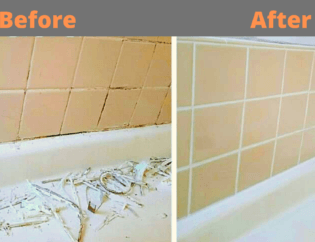
- No raking out. Regrouting means removing the old joints first. If that line is missing it will return as a variation.
- No joint width or tile size. As above — the number cannot be right without them.
- Epoxy priced at cement labour rates. Either the quote is wrong or the applicator has not done it. Both land on you.
- No haze removal. On epoxy this is a real, billable stage. Its absence means it was not planned.
- Brand unnamed. “Epoxy grout” covers an enormous quality range. Ask which product, then ask for the TDS.
- A price over the phone, no site visit. Beyond a small bathroom, that is a number built to win the job, not to do it.
Back to those three quotes
₹5,000 almost certainly buys cement grout, no raking out, and a fast hand. In a dry utility area that might be exactly right.
₹22,000 should buy epoxy, proper removal of the old joints, haze removal, and someone who has done it before. In a bathroom over a neighbour’s flat, that is not the expensive quote. That is the one priced against the actual risk.
₹12,000 is the one to interrogate, because middle quotes are where scope quietly goes missing. Ask the five questions below and it will resolve itself into one of the other two.
- Material only, labour only, or all-in?
- Which product, and can I see the data sheet?
- What tile size and joint width is this calculated on?
- Does it include raking out and haze removal?
- What is the warranty, and what voids it?
Anyone who answers all five without pausing is quoting a job they understand. That is worth more than a discount.
Where Wallnut fits
We make tile grouts, including Connect Lock Epoxy Crystal Grout and CL Lite. We sell material and not installation — so the labour half of your quote is between you and your applicator, and we have no reason to talk it up.
For matching a grout to your application, joints and exposure, talk to our technical team. Data sheets for the range are in downloads.
The technical comparison behind the money is in epoxy grout for tiles, and if colour is still open, how to choose grout colour.
Frequently asked questions
How much does tile grouting cost per sq ft in India? Epoxy grouting is commonly quoted at ₹25–50 per sq ft all-in as of August 2026, with cement grouting well below that. Metro rates run to the top of that range, and both move with joint width and tile size. Always establish whether a quote is material only or all-in before comparing it to anything.
Why is epoxy so much more expensive than cement grout? Two reasons, roughly equal. The material costs several times more per kg, and it demands a skilled applicator working fast in small sections — epoxy is unforgiving once it starts to set.
Is epoxy grout worth it? In bathrooms, kitchens, commercial floors and anywhere spills or standing water are routine, usually yes — it avoids the regrout cycle that eats the saving, and it is a better seal in the place where a leak costs the most. In dry, low-traffic rooms a good polymer-modified cement grout is often the sensible choice.
Can I just grout over the existing grout? Not properly. The old grout has to be raked out to a depth the new grout can key into. A skim over the top fails, and it is the single most common reason we get asked to diagnose a floor that was “just regrouted”.
Does tile size change the cost? Significantly. Smaller tiles mean more joint length per sq ft, and wider joints mean more volume per metre of joint. Both push consumption up on the same floor area.