
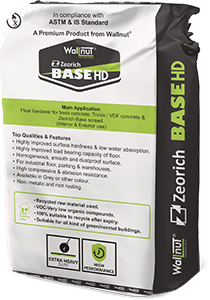
Dry-shake floor hardener broadcast on fresh concrete — creates an extremely hard, abrasion-resistant VDF surface for warehouses, factories and high-traffic industrial floors.
What Makes Base HD
Stand Out
Dry-shake floor hardener broadcast on fresh concrete — creates an extremely hard, abrasion-resistant VDF surface for warehouses, factories and high-traffic industrial floors.
Creates an extremely hard, dense surface on fresh concrete — significantly higher hardness than untreated concrete.
Specifically formulated for Vacuum Dewatered Flooring (VDF) systems — produces the dense hard surface VDF is known for.
Outstanding abrasion and impact resistance for high-traffic industrial floors — forklifts, heavy vehicles, pallet trucks.
Simple broadcast onto fresh concrete — applied dry and trowelled in for rapid, efficient installation.
Significantly reduces dusting of industrial concrete floors — common problem in untreated warehouses and factories.
Enhanced chemical resistance for factory environments where spillage of oils, fuels and chemicals occurs.
Works with standard OPC, blended cements and all concrete mixes — no special formulation required.
Available with metallic aggregate for maximum hardness or quartz aggregate for non-metallic applications.
Technologies
Creates surface hardness far exceeding untreated concrete
Designed for VDF concrete flooring systems
Outstanding resistance to forklift and heavy vehicle traffic
Broadcast application — no mixing, no special equipment
Where Base HD Performs
Distribution centres, logistics and storage warehouse floors
Manufacturing and industrial plant floors with heavy traffic
Multi-storey car parks and ground level parking areas
Commercial basement car parks and loading areas
Vehicle workshops, engineering shops and service centres
Railway platforms, transport hubs and public infrastructure
How to Use Base HD
- Use minimum C25 concrete with 0.45 max water-cement ratio
- Lay and compact concrete to required level and thickness
- Strike off and float to remove surface water bleed
- Begin application when bleed water has just disappeared — timing is critical
- Broadcast 2/3 of total quantity (typically 3–5 kg/m²) evenly over fresh concrete
- Allow Base HD to absorb moisture — approximately 2–3 minutes
- Machine float surface thoroughly using a power float
- Ensure even coverage with no missed areas
- Broadcast remaining 1/3 over floated surface
- Machine float again until uniform, hard surface achieved
- Final trowelling with power trowel to desired finish
- Total coverage: typically 5–7 kg/m²
- Apply curing compound immediately after final trowelling
- Or cover with polythene for wet curing
- Minimum 7 days curing — do not allow to dry rapidly
- Protect from early rain, frost and pedestrian traffic
- No heavy traffic for minimum 7 days
- Full design strength at 28 days
- Apply sealer or coating if required for chemical resistance
- Saw-cut joints within 12 hours to prevent random cracking
Ideal working temperature +5°C to +35°C. Avoid direct sunlight and extreme temperatures during application.
Always ensure the substrate is clean, dry and structurally sound before application.
Lift a tile to verify adhesive coverage — minimum 65% floor, 80% exterior and wet areas.
Mix only what can be used within the pot life. Do not add water to extend working time.
Timing is critical — apply when bleed water has just disappeared from fresh concrete. Too early or too late will compromise performance.
Technical Data
Coverage varies with substrate condition, tile format and application method. Use our Product Calculator for exact estimates per project.
🧮 Open Calculator →More from Zeorich
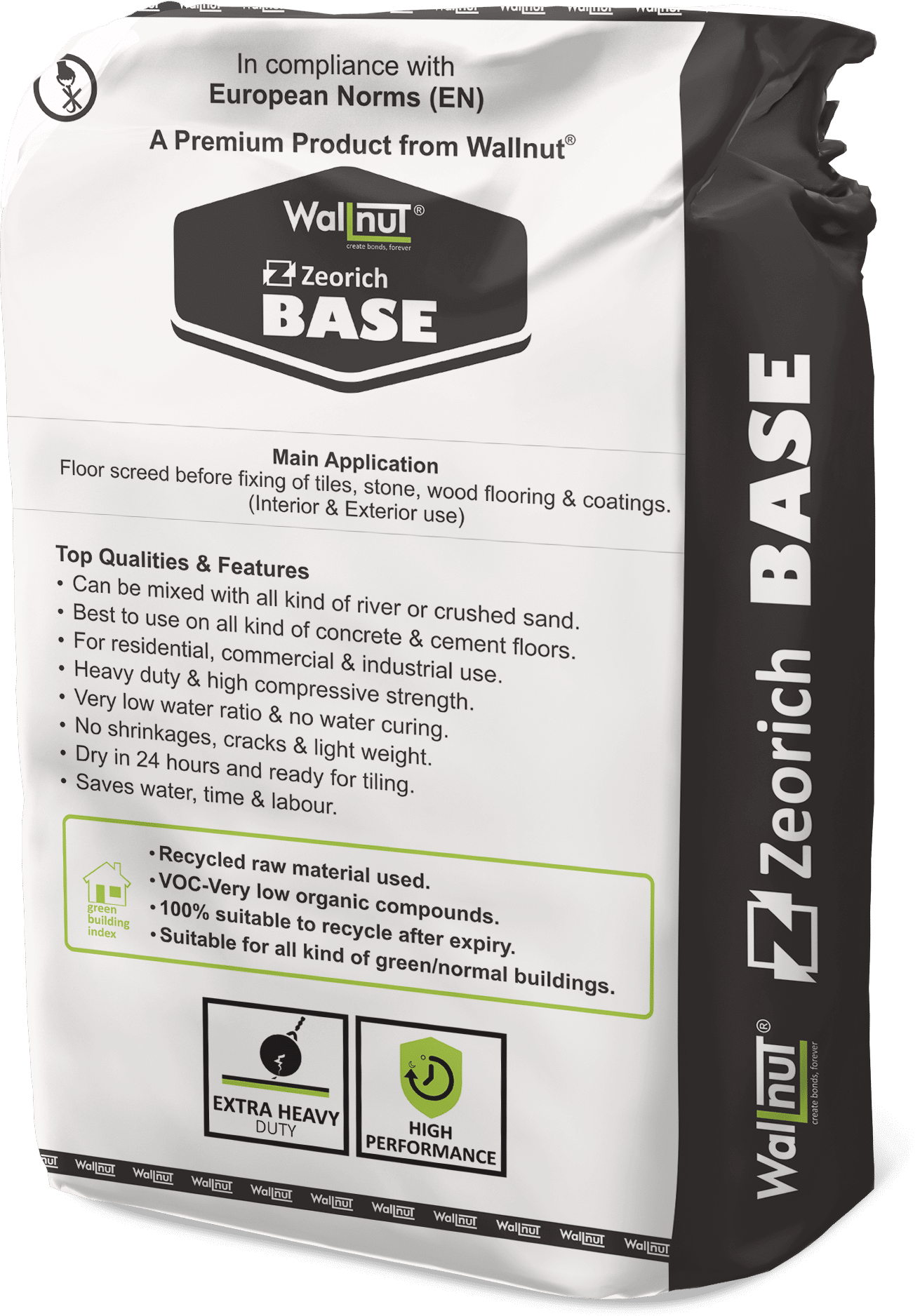 PM Screed
Polymer screed binder for bonded and unbonded floor screed systems
View Product → Aggregate
Recycled basalt aggregate for use with Zeorich Base screed system
View Product →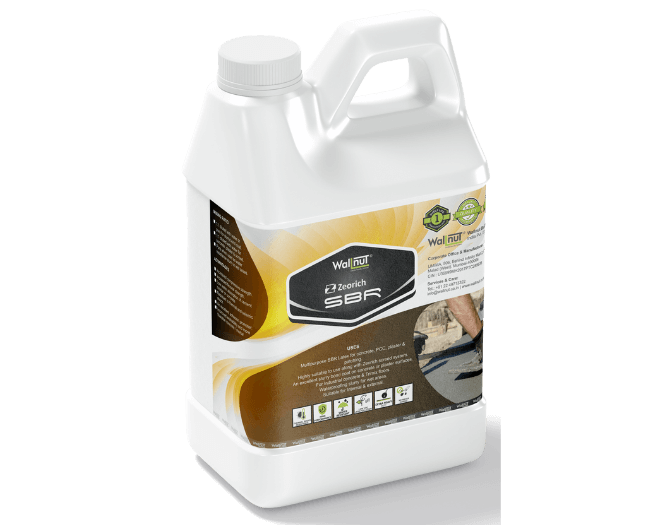 SBR
SBRReady to Build
with the Best?
Download the Technical Data Sheet, use our product calculator, or speak to our technical team for project-specific advice.